

India as an amenable jurisdiction
India is widely recognized as an amenable jurisdiction for trademark registration and protection of trademark rights, inter alia:
Constant modernization of trademark offices with a vision to protect IPR; leading to growth in trade, commerce and industry;
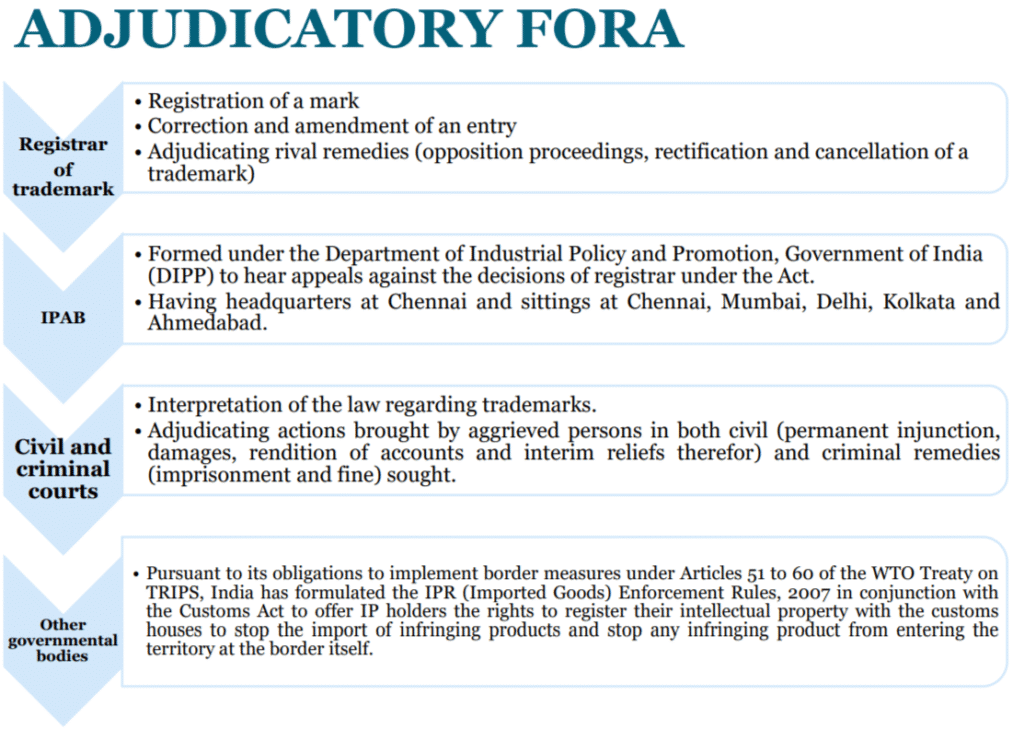
Multi-tier enforcement mechanism – Registrar, intellectual property appellate board (IPAB), civil and criminal courts;
At the Registrar level:
Wide recognition of trademarks, trade-dress and well-known trademarks;
Speedy registration registration process process (constantly (constantly improving improving; for instance, instance, the finance finance minister minister of India has proposed a policy which will allow registration of trademarks within a period of 1 month)
Rival trademark remedies– opposition, rectification / cancellation of marks;
At the IPAB level:
Original (rectification/cancellation proceedings) and appellate jurisdiction (against the orders of the registrar);
Specialized authority intending speedy disposal;
In the courts of law:
Grant of ex-parte ad-interim orders for securing rights – anton piller orders, john doe orders, mareva injunction, norwich pharmacal orders;
Protection afforded to un-registered trademarks on various grounds (passing off action);
Recognition Recognition of cross-border / trans-border reputation reputation;
Recognition of internationally accepted principles including international exhaustion;
Parallel civil and criminal remedies available
Trademark As An International Concept

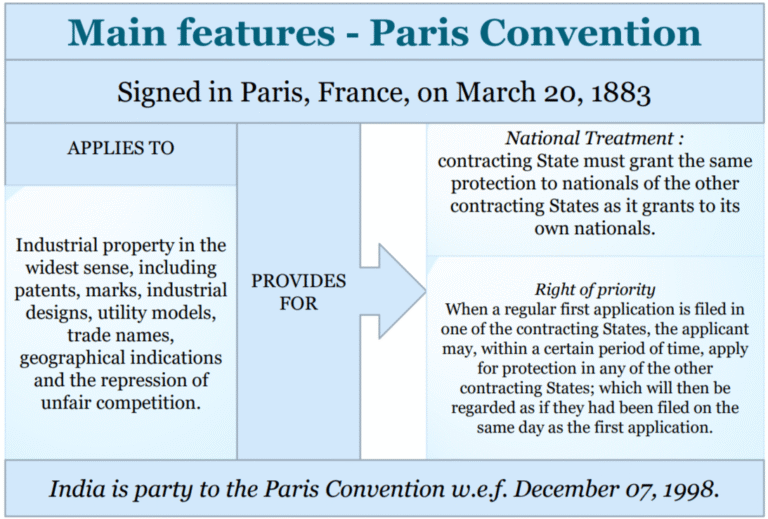
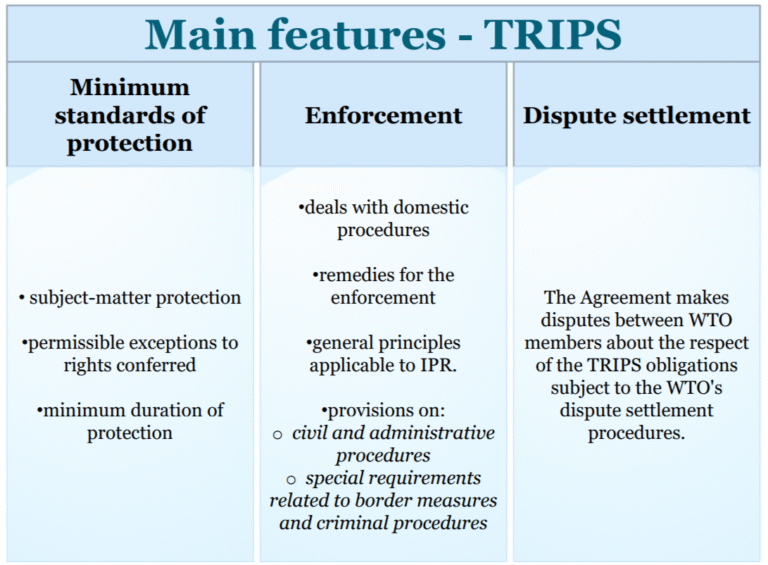

The Indian Statute: Trademarks Act , 1999 (The Act )
The Trade Marks Act, 1940 (5 of 1940) was the first statute law on trade marks in India.
Prior to that protection of trademarks was left to [BE] governed by common law. Since amended, the Trade Marks Act, 1999 is the current governing law related to trademarks in India.
The 1999 Act was enacted to comply with the provisions of the TRIPS.
The Act brought about following fundamental changes:
- Complies with the obligations under the TRIPS
- Provides for registration of service marks
- Enables filing of multi-class trademark application
- Increased term for validity of trademark from 7 years to 10 years
- Provision of enhanced punishments in case of false trademarks
- Provision for registration of collective marks
- Constitution of IPAB
- Expansion of the term “mark” under section 2 to include shape, packaging, combination of colors and any combination thereof.
Draft Trade Marks (Amendment) Rules, 2015
The Rules are intended to amend the current Trademark Rules, 2002 and have not been notified yet.
The main highlights of the proposed amendments are in the following terms:
- Number of forms reduced: The draft rules have reduced the total number of forms to 8, for filing various applications.
- Deficient fee critical: in the event an application at the first instance is filed with any deficient fee or without fee, the same shall be deemed not to have been filed for all purposes.
- Registration under different classes to be specified at the first instance
- No handwritten information is permissible, all filings have to be typed and submitted in the exact replica of the prescribed format.
- IP gateway – all filings not requiring any fee deposit can be made under a separate window.
- The classification provided under Schedule IV to be replaced by “the international classification of goods and services” (the NICE classification), published by the WIPO.
- Registrar to maintain a list of well known registered/non registered marks.
- Notice of hearing will be sent by the registrar in all cases, and will not be optional now.
National Intellectual Property Rights Policy, 2016
The Government of India, on 13.05.2016, unveiled the national intellectual property rights (IPR) policy to create a larger institutional framework to strengthen the IPR regime, with the slogan “Creative India, Innovative India”.
Announcing the approval to the policy by the Cabinet, the finance minister Arun Jaitley stressed that India’s IPR policies are WTO-compliant.
The minister stated that in India, we have a very effective and robust trademark law in place, but the new policy deals with the mechanism of trademark registration.
The Finance Minister pointed out that trademark offices have been modernized, and that we aim to bring the time taken to a few months by 2017.
Highlights of the Policy
- It sets in place an institutional mechanism for implementation, monitoring and review and aims to incorporate and adapt global best practices to the Indian scenario.
- The policy recognizes that India has a well-established TRIPS-compliant legislative, administrative and judicial framework to safeguard IPRs, which meets its international obligations while utilizing the flexibilities provided in the international regime to address its developmental concerns.
- It reiterates India’s commitment to the Doha Development Agenda and the TRIPS agreement.
Objectives of the Policy
The Policy lays down the following seven objectives:
- IPR awareness: outreach and promotion – To create public awareness about the economic, social and cultural benefits of IPRs among all sections of society.
- Generation of IPRs – To stimulate the generation of IPRs.
- Legal and legislative framework – To have strong and effective IPR laws, which balance the interests of rights owners with larger public interest.
- Administration and management – To modernize and strengthen service-oriented IPR administration.
- Commercialization of IPRs – Get value for IPRs through commercialization.
- Enforcement and adjudication – To strengthen the enforcement and adjudicatory mechanisms for combating IPR infringements.
- Human capital development – To strengthen and expand human resources, institutions and capacities for teaching, training, research and skill building in IPRs.

Types of Trademarks Registrable in India
Under the Indian trademark law, the following types of trademarks can be registered:
- Product trademarks: are those that are affixed to identify goods.
- Service trademarks: are used to identify the services of an entity, such as the trademark trademark for a broadcasting service, retails outlet, etc. They are used in advertising for services.
- Certification trademarks: are those that are capable of distinguishing the goods or services in connection with which it is used in the course of trade and which are certified by the proprietor.
- Collective trademarks: are registered in the name of groups, associations or other organizations.
- Word mark – A word mark refers to the right of the owner only on the words, letters, etc. but have no right on the way it is presented.
- Sound trademarks – A sound trademark, therefore, is a sound or melody with a distinctive recognition effect. In order to able to protect it, the sound must be reproducible graphically, for example, using notes. A well-known sound trademark is the Yahoo Yodel in favour of Yahoo Inc. which was the first sound trademark obtained in India in August, 2008.
- 3-dimension trademarks – In India definition of mark includes shape of goods and therefore three dimensional or 3-dimensional or 3D trademarks can be registered under the provisions of the Act.
- Shapes and packaging – In India, the definition of trade marks under the Act includes shapes and packaging as long as it is capable of being represented graphically and is able to distinguish goods and services of one person from those of another.
- Color trademark – Section 10 of the Act states that a trademark can be limited to a particular colour or combinations of colors. However, such limitation as to colour will only be allowed on determining the distinctive character of the mark.
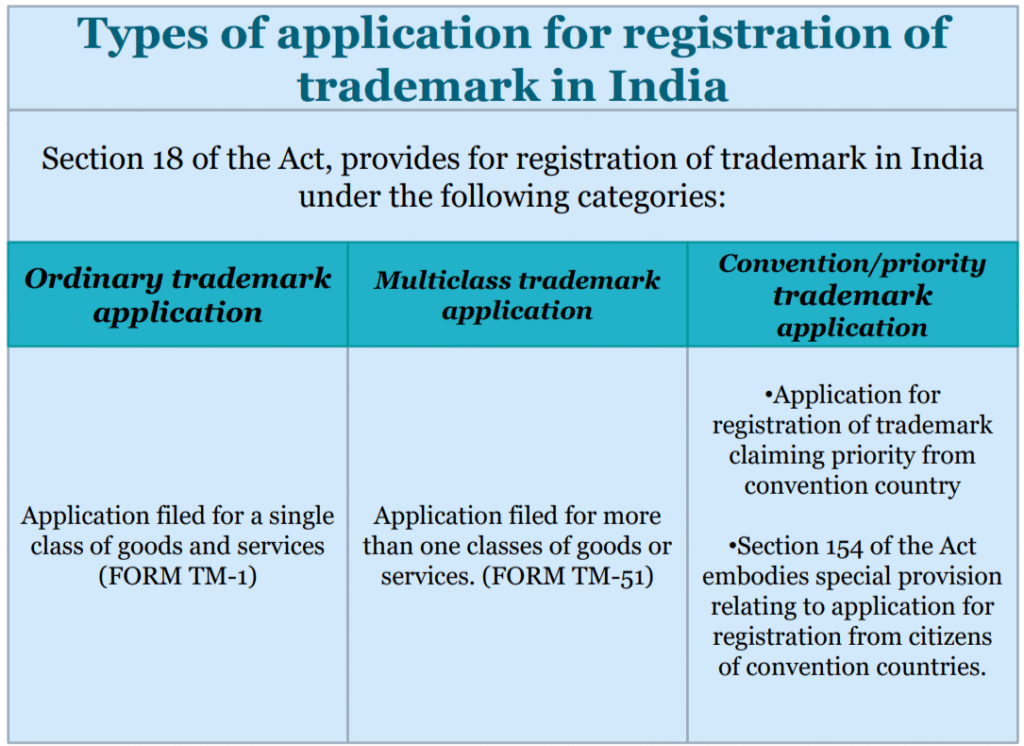
Trade Dress and Trademarks
India widely recognises and protects trade-dress.
Trade dress (like a trademark) performs as a source identifier, although an unregistered one.
A trade dress is an arrangement by which a particular product can be distinguished on the market by virtue of its packaging, color, design or schematic arrangement.
(Wal-mart Stores Inc v Samara Bros Inc (2000) 529 US 205 (SC)
Trade dress presents wider protection than a trademark in terms of packaging and product design (i.e., the overall look of the product), in conjunction with centering on its complete selling image.
In cases where passing off is claimed, it has been discerned that a court may take into cogitation and compare the challenging trade dress in its entirety to reach an evidential view of whether there is a probability of confusion (i.e., shape of container, color, printing and the relationship of all those elements separately from the distinctive feature must be taken into consideration). (Smithkline Beecham plc v Hindustan Lever Ltd (2000) PTC 83 Del)
Well-Known Trademarks
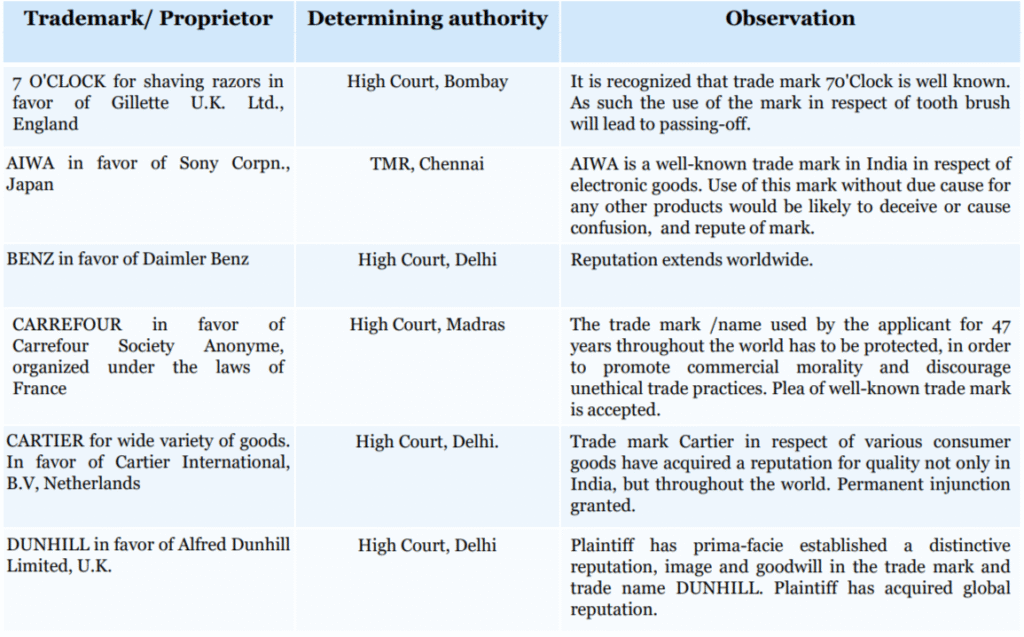
Indian trademark law accords extraordinary protection to “Well known” trademarks and recognition on the basis of their international, national and cross-border reputation.
Section 2(1)(zg) of the Act defines well-known trademark as:
“a mark which has become so to the substantial segment of the public which uses such goods or receives such services that the use of such mark in relation to other goods or services would be likely to be taken as indicating a connection in the course of trade or rendering of services between those goods or services and a person using the mark in relation to the first-mentioned goods or services.”
The Act (inter alia in Sections 11(6) and 11(9)), accords protection to well-known trademarks at two levels:
- Against the registration of any similar marks;
- Action against the misuse of well-known trademark.
Under the Indian law, to determine whether a trade mark is a well-known trade mark, the following conditions are not taken as a pre-requisite, thereby accepting the cross-border reputation of a mark in India:
- That the trade mark has been registered;
- That the trade mark has been used in India;
- That the application for registration of the trade mark has been filed in India;
- That the trade mark is well-known to the public at large in India.
IPAB maintains a list of well-known trademarks in India as accorded recognition by the various fora; Illustratively:
Rights of the ‘Owner’ of Trademark
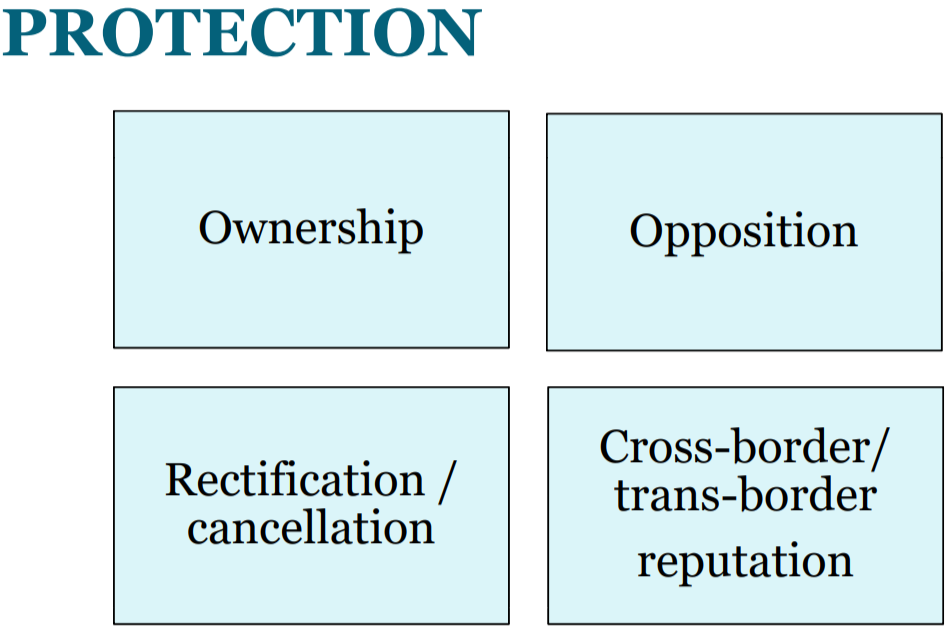
Indian trademark laws under Section 28 of the Act, provide protection to the owner/registered owner/registered proprietor of the mark by ensuring the exclusive rights to use in to identify the goods or services or authorize another to use it in return of payment, and to obtain relief in respect of the trademark in the manner provided under the Act.
Opposition Proceedings
After the advertisement of a trademark in the trademarks journal, (which is available online at the website of office of registrar of trademarks) an opposition challenging the application for registration can be filed by any person within a period of 3 months (which may be extended by a period not exceeding 1 month).
Rectification / Cancellation of Trademark
An aggrieved person may file an application before the registrar of trademarks or to the IPAB for cancellation or varying the registration of the trademark on the ground of any contravention or failure to observe a condition entered on the register in relation thereto. The application for rectification can also be filed for removal of an entry made in register, without sufficient cause or wrongly remaining on the register and for correction of any error or defect in any entry in the register.
A cancellation application may be made by any person other than the registered proprietor or user on following grounds:
- the registered user has used the trade mark in way as to cause or to be likely to cause, deception or confusion;
- the proprietor or the registered user misrepresented, or failed to disclose, some fact material to the application for registration which if accurately represented would not have justified the registration of the registered user;
- the circumstances have changed since the date of registration
- the registration ought not to have been effected having regard to rights vested in the applicant by virtue of a contract in the performance of which he is interested
This action can be taken by the registrar suo moto, if he has reasonable grounds to believe that the quality of the goods or services in relation to which the trade mark is to be used is either not being enforced or is not being complied with;
Statutory Force Behind Cross Border Reputation of Trademarks in India
Trans-border reputation is provided in Section 35 of the Act and offers protection to foreign trade marks on the basis of their international reputation.
Under this section the Indian courts have recognized action by foreign plaintiff on the basis of passing off solely upon the reputation of his good or services on the foreign soil.
Cross-Border Reputation: Protection Under Indian Law
The reputation of a trade mark is not limited to the country of its origin, but has surpassed the geographical frontiers and is spread all across the world which is known as cross-border or trans-border reputation of a trademark.
In the landmark judgment, N.R. Dongre v. Whirlpool Corpn. 1996 PTC (16) 583 (SC), the doctrine of “trans-border reputation” was considered in detail for the first time. Hon’ble Supreme Court held that:
“In today’s world it cannot be said a product and the trade mark under which it is sold abroad, does not have a reputation or goodwill in countries where it is not available. The knowledge and awareness of it and its critical evaluation and appraisal travels beyond the confines of the geographical area in which it is sold.”
In Blue Cross and Blue Shield Association v. Blue Cross Health Clinic (1990) IPLR 92 (Del), the Hon’ble Delhi High Court granted an ex-parte injunction relief on the ground that there was an international reputation although there was no registration or use of the trade mark in India.
Other Landmark Judgments on Cross Border Reputation
- Ruston & Hornby Ltd. v. Zamindara Engineering Co. (1970 2 SCR 222)
The Supreme Court held that “there does not seem to be any requirement that the plaintiff must carry on business in India before bringing an action for passing off for he can prove that he has otherwise acquired reputation in the country.” - Kamal Trading Co., Bombay v. Gillette U.K. Limited (1988) PTC 1 (Bom-DB)
Hon’ble Bombay High Court, accepting the cross-border reach of goodwill, observed:
“…It is necessary to note that the goodwill is not limited to a particular country because in the present days, the trade is spread all over the world and the goods are transported from one country to another very rapidly and on extensive scale…In our judgment, the goodwill or reputation of goods or marks does not depend on its availability in a particular country”
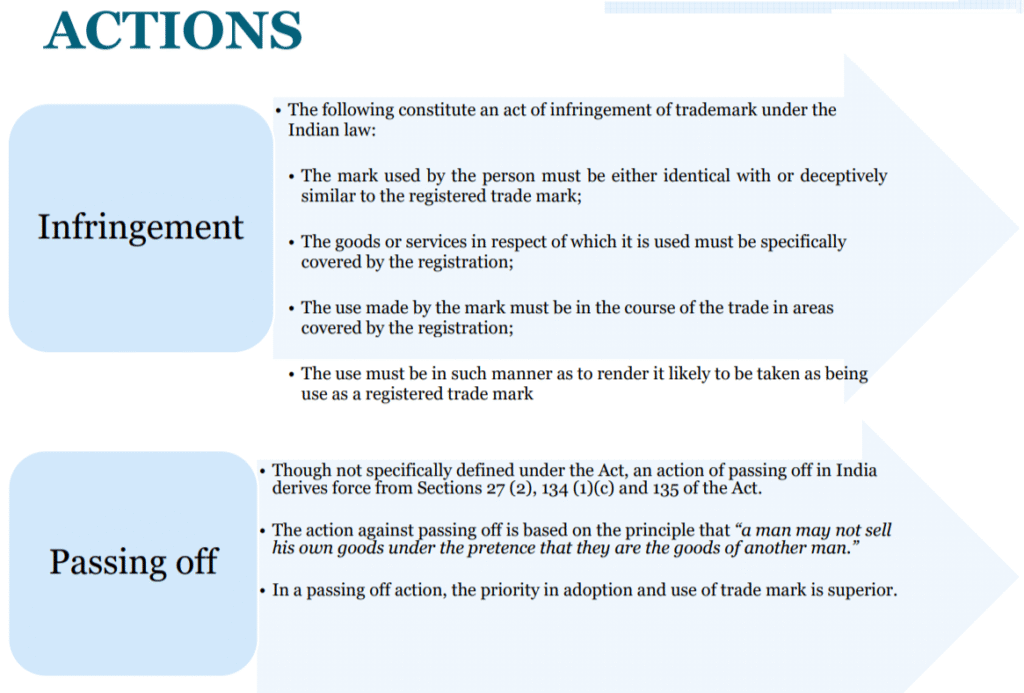
Differences
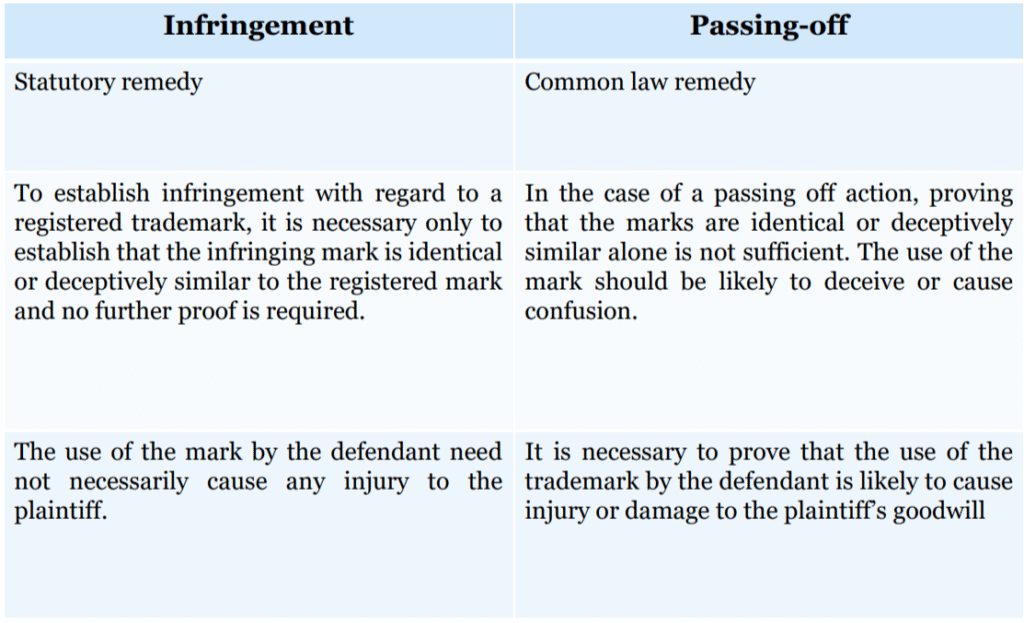
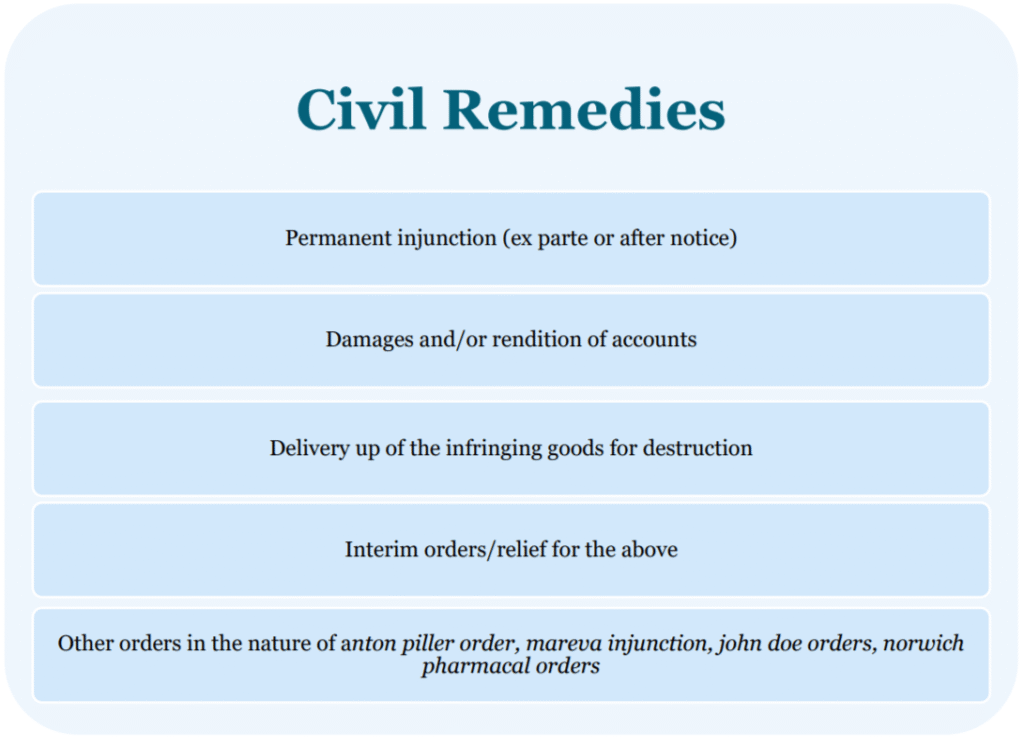
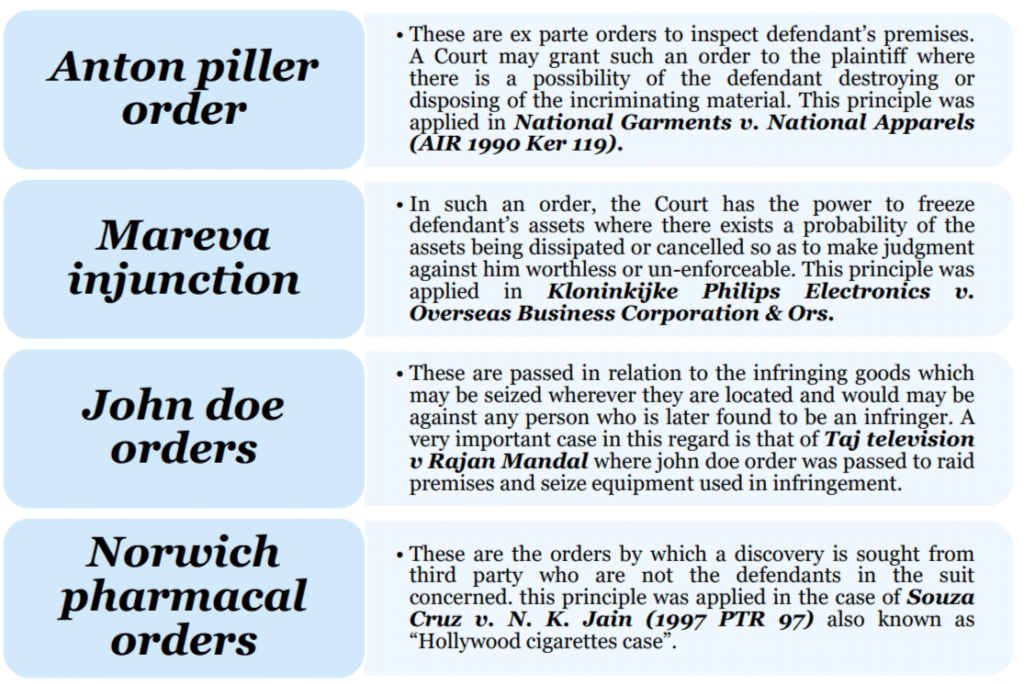
Criminal Remedies
The Act, provides for criminal remedies against infringement and passing off of the trade mark under Chapter XII which deals with offences, penalties and procedures.
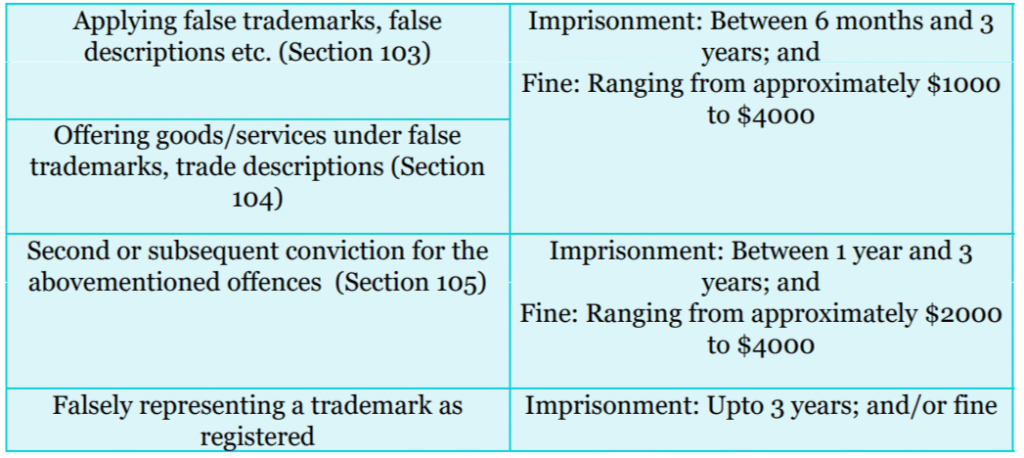
Remedies in Parallel
The benefit of taking recourse to criminal action is that the same can be initiated against unknown persons as well and revealing the identity of the infringers is not mandatory therein.
Plenty of times it happens that the identity of the manufacturers and the distributors of the infringing material is not known to the complainant and the same operates as an obstacle in initiation of criminal action.
The underlying difference between a civil and criminal action is that under criminal proceedings, one can request for initiation of a search and seizure proceedings against known and unknown persons.
Conclusion
The new Intellectual Property Rights Policy and the adoption of Madrid Protocol have paved the way for international applications for registration of trademark in India.
Also, the approach of the Indian judiciary to extend protection to international well-known trademarks, is encouraging to the international brands planning to enter the large consumer base available in the country.
The comprehensive system of e-filing in India minimizes the paperwork at trademarks registry offices. Also, papers received offline are being digitized and updated in real time.
The trademark registration offices have increased recruitment and invested in human resources programs and technical training programs to help examiners become adept at reviewing international filings.
By allowing parallel civil and criminal proceedings against a violator of trademark, Indian law ensures protection of trademarks in all tang